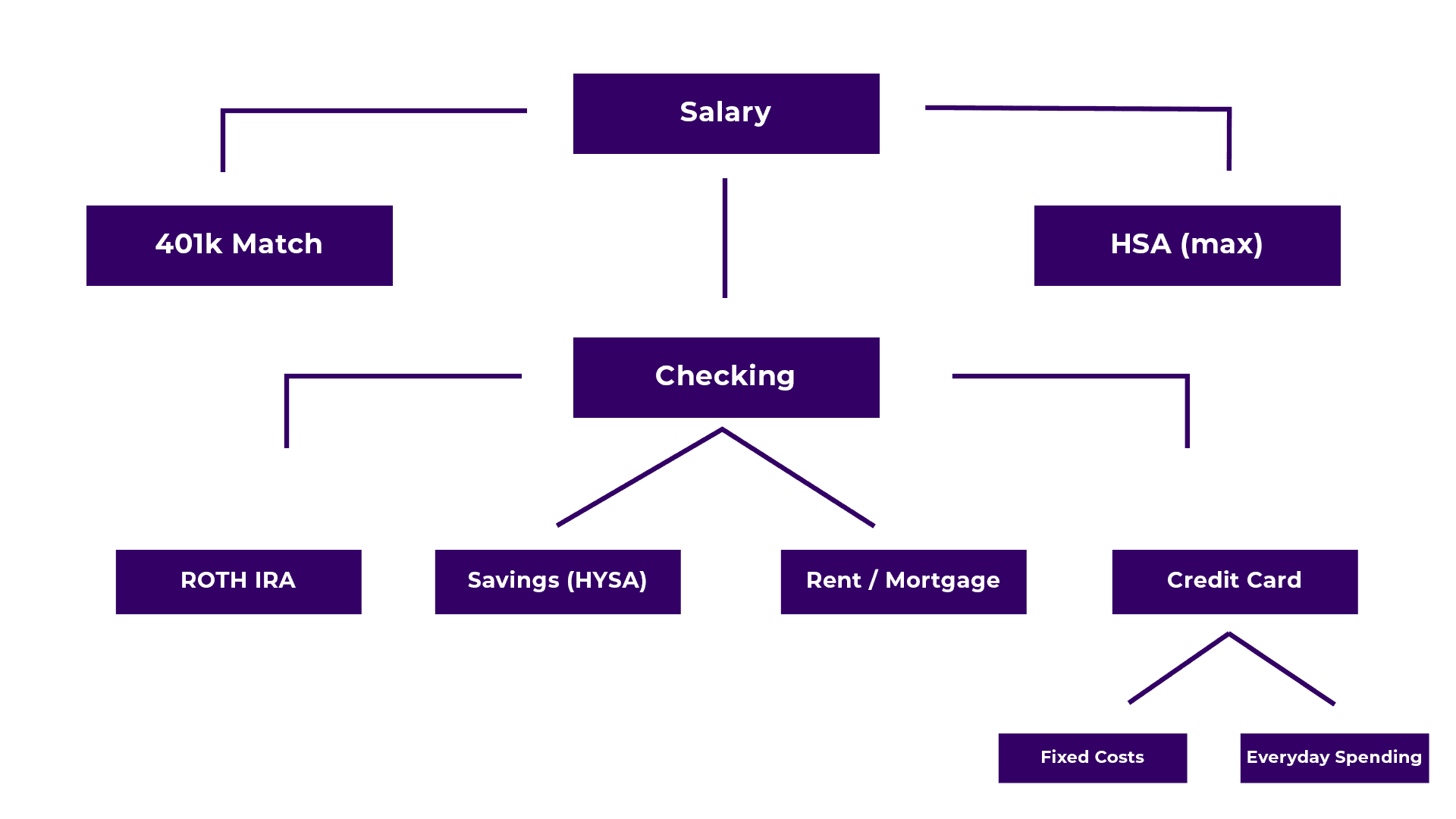
Worrying about finances can be mentally taxing. More people spend hours micromanaging their finances than they do enjoying the things they love. In this blog post, we will be walking through how to set up a system that works for you so you can spend less time focusing on money management, and more time on the things you love. Here is a personal finance waterfall that you can implement into your financial system.
401k
If you have a 401k through your company, the money contributed to this account will be taken out of your paycheck before the money hits your checking account. It is recommended that you contribute up to the employer match if your employer offers one (more if you're able). Check with your HR department to get this set up.
Checking Account
The first account we will start with is a Checking account. This will be your financial “home base.” On payday, your salary will be deposited into your checking account, and from there we will tell our money where to go. You can use any traditional or online bank for this account.
High-Yield Savings Account
The next account type that we want is a “high-yield savings account.” This account will be your emergency fund. It is recommended that you keep 3-6 months of living expenses in this account in case you lose your job or your car breaks down. You can also save up for big purchases here, as this account will earn more interest than your checking account. You will set up a recurring transfer to this account and fund this first before moving on to investments. I personally use Wealthfront for my HYSA (high-yield savings account).
ROTH or Traditional IRA
If you are in a low tax bracket, a ROTH IRA will be the next account you’ll want to contribute to. Contribute as much as you can afford, the goal is to have monthly transfers going into this account. You can later up the amount you contribute as you earn more money later in your career. I personally use Vanguard for my ROTH IRA. You'll need to set up recurring transfers on the platform your ROTH is on and link your checking account to the platform.
HSA
If you are young and healthy you may want to consider sending money to a HSA. This account requires you to have a high deductible health plan but is triple tax-advantaged. You can contribute extra money here for medical expenses and some HSAs allow you to invest and grow your money tax-free. This can be used as an additional retirement account as well. Talk to your HR department to see if your company offers an HSA and ask them how to enroll.
Here is an example of the financial system I use for my own money.